All Saints' Episcopal Church
634 West Peachtree Street Northwest, Atlanta, GA 30308
/-84.387889,33.771513,12/300x186@2x?access_token=pk.eyJ1IjoibHpjYW11dGkiLCJhIjoiY2o3a281dWJvMHE4ajMzbGF4enJyNHRiciJ9.DhYjvPk5E_wJvys5DU5v2A)
Chattahoochee Working Group Meetings
MARCH MINUTES
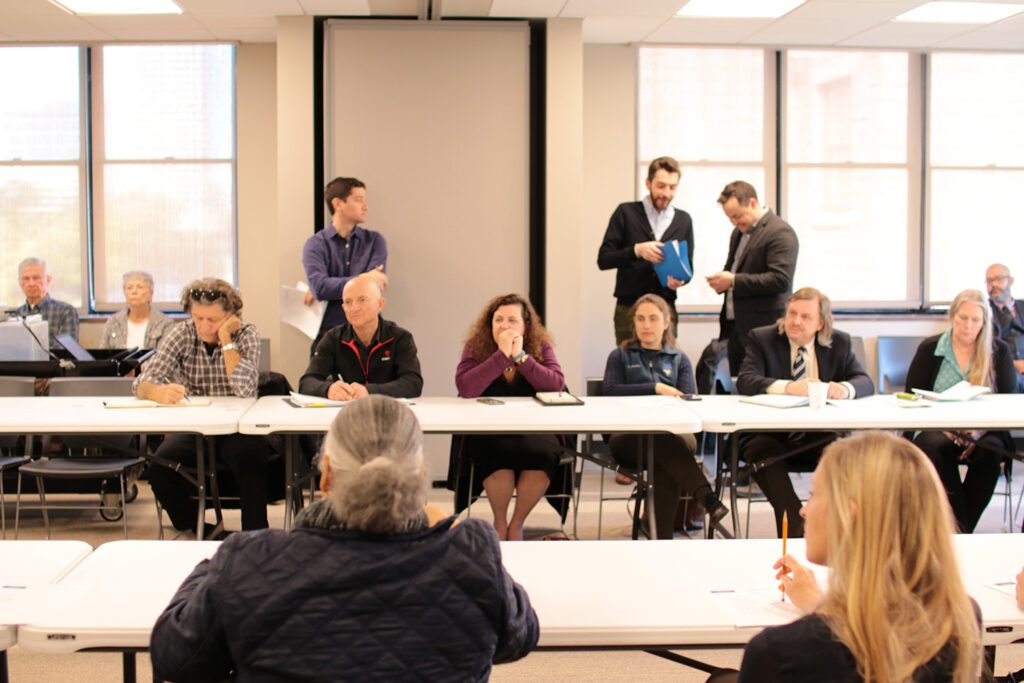
Walt Ray welcomed everyone to the meeting and invited a round of introductions. Announcements included:
- Riverwalk Atlanta hosts a work day on the first Saturday of each month, 9 to 12 at 2386 Paul Avenue, Atlanta, Ga 30318. Please consider helping control invasive species and improving trails.
- Chattahoochee RiverKeeper is hosting Sweep the Hooch in Saturday, April 6th. https://chattahoochee.org/sweep-the-hooch/
- Chattahoochee RiverKeeper is hosting its 25th Anniversary with a Torch Relay down the Hooch starting on March 9th. https://chattahoochee.org/relay/?bblinkid=144633186&bbemailid=12568709&bbejrid=963271960
- The Georgia Trail Summit will be Sunday and Monday, May 5 and 6 in Columbus, GA. www.GeorgiaTrailSummit.com
Walt then shared a summary of February’s meeting, including the discussion about kicking-off the Sub-Area Committees, which are scheduled for:
SAC #1: Tuesday, March 26, 6:00 pm to 8:00 pm at Roswell River Landing
SAC #2: Wednesday, March 27, 6:00 pm to 8:00 pm – City of South Fulton, City Hall
SAC #3: Thursday, March 28, 6:00 pm to 8:00 pm at Historic Banning Mills
Participants were reminded to check and make a shortcut to the initial landing pages for the project website, which can be found at www.ChattahoocheeRiverLands.com.
SCAPE Project Manager, Chris Barnes, shared a summary of Task 2 Summary: Existing Literature and Conditions Analysis. SCAPE Design Principal, Gena Wirth then reviewed high-level themes of: Ecology, History, Connections/Transit, and Demographics. A link to review the summary memo and appendices will be shared digitally to all CWG attendees (past and current) shortly after this meeting. All are asked to review and provide feedback to the SCAPE team by mid-April.
The SCAPE team then led CWG attendees through a visioning exercise to kick-off Task 3: Corridor Vision & Concept. During the next few months, SCAPE will be collecting input from the CWG, the SACs, and the general public in order to glean what the vision for the corridor is. This document, to be completed in May will guide decisions as the team and the region look more closely at developing the greenway plan, this summer and autumn. Worksheets were provided to each CWG attendee with questions around the four focus areas of: Protect, Invite, Engage, and Redefine – designed to prompt thought and discussion. Sample questions were discussed with varying answers from attendees including:
Protect: Should the greenway prioritize access or conservation? Spurred the following responses:
‘No touch conditions’ should be protected; Unique and natural areas – stay away from; Access does not come at the cost of conservation
Invite: Should the greenway be a linear continuous public path along the river or should it be a network of destinations and loops? Spurred the following responses:
Regional – connectivity (up/down stream) along the corridor; Paths & cars – Rail? Public transportation; Camping (tent) destinations, particularly south of Atlanta; Local – Link in and connect back to communities; Destination points along corridor to relax, not get into the river, but restaurants, enjoy a cup of coffee or shopping; ‘RiverWalk’ destination point; Perpendicular connections to community = creeks; Not either/or – both; Loops more interesting than just down the river; Linear experience is a ‘game changer’; As much as we want a 100-mile long continuous trail, private property will be a major design challenge; Yes – Double Yes!; Strengthen our sense of place – strengthen our region’s identity; Both – Different user groups will use different kinds of trails – families and neighbors on local loops and adventurers on long, linear trails; Developable areas – in a few places – like Denver, very small area
Invite: Should access points be distributed equally along the length of the river or distributed based on population density? Spurred the following responses:
Not a formula – this will be very site specific; Follow the road network; Population will follow amenities; Southern area is more equitable; Size/Scale of access is a question – scales may be larger in areas already well populated; May be 20 years before something gets built – but better plan for people now!; Not an either/or; Maximum distance recommendations; Ecological asset point of view – relatively intact areas – do we need to disturb these areas just to provide access points? Unused access points are not useful – they result in crime, and then people surely won’t come – need user groups in place first.
Engage: Should the greenway incentivize economic development? Spurred the following responses:
Within 2000’ of banks, there are lots of restrictions; Preserve the tree canopy; Design or protections guidelines at sensitive areas, and up creek corridors; Not incentivize development, but development will come – can we identify appropriate nodes or spots where river-side amenities would be most accessible and would serve trail (water and land) users best. Can places like Roswell become ‘trail towns’ – attracting and serving those using the trail systems?
Engage: How can the greenway project avoid displacing socially vulnerable communities in this process? Spurred the following responses:
This is a very big concern; EPA’s Urban Waters Program – can help address; E.J. community along Proctor Creek; Housing corporation to help people buy their homes; Grove Park Community – Westside Park Neighborhood Association is an excellent case study; Team can advance solutions that could apply to broader community; Be sure to invite the right people; Who is not represented?
Redefine: Is this a natural experience or an active recreational feel? Spurred the following responses:
Environmental feel with pockets of activity; Width of trail can limit use in unspoiled areas; Outlets & pockets of activity; Just ‘be’ in a place is really the key; Opportunities are shrinking; Balance; Divert people into introductory points
Redefine: Should the greenway be a national destination? A regional destination? Or a local destination? Spurred the following responses:
Aim for a national destination is a mistake – people will come if it serves the local population well; Goal: Local – orient to people in the region; Chattanooga build their greenway for Chattanooga, but it appeals to a national audience; Proof will be how people who live here will use it; Goal should be regional; How some define ‘local’ may be how others define ‘regional’; Build something nice and people will come from all over to enjoy, see, experience it; Different user groups; Quiet is a great resource – driven by naturalness