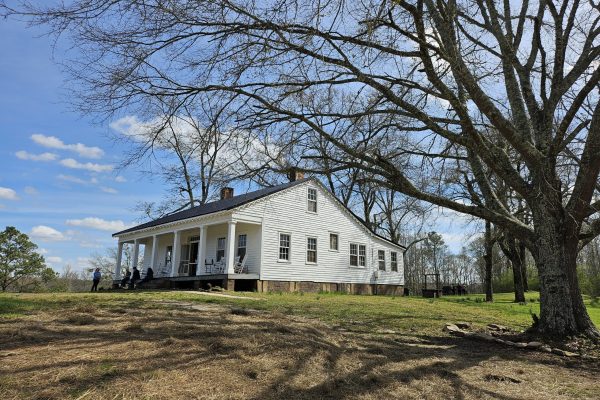
This Historic Horace King House is located near the Chattahoochee River on the Southern end of Moore’s Bridge Park in Carroll County, Georgia. This modest structure is one of the few remaining homes connected to Horace King (1807–1885), a formerly enslaved Afro-Indigenous man who became one of the most respected bridge builders in the American South. While best known for his engineering work, King also lived and worked in the Carroll County area during important periods of his life. The home serves as a rare physical link to his legacy and to the contributions of Afro-Indigenous communities in the 19th-century South.
Around
the site
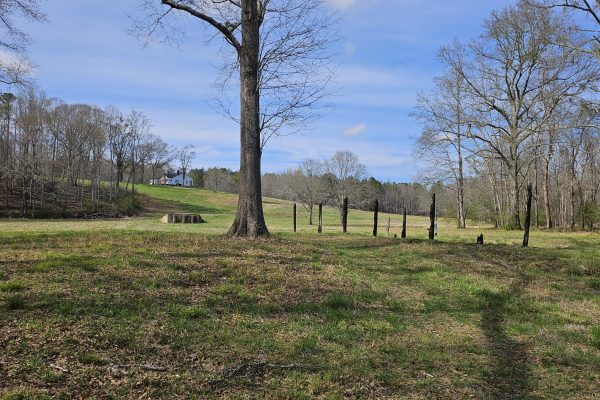
The southern end of Moore’s Bridge Park and the Horace King House are currently closed to the public. The house is a simple wood-frame structure in a quiet rural setting. Interpretive signage provides background on King’s life, including his early years in bondage, his eventual freedom, and his lasting impact on public infrastructure and civic architecture across Georgia, Alabama, and neighboring states.
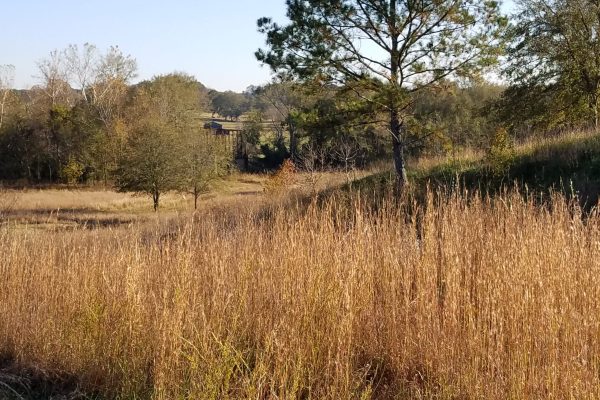
The house is occasionally included in local heritage tours or educational programs that focus on regional history and under‑represented historical figures. The surrounding area still reflects the rural environment King would have known during the mid‑1800s. From the house, visitors can see the steel span replica of Moore’s Bridge. The original 480-foot wooden covered bridge—co-owned and built by Horace King, James D. Moore and Charles Mabry—connected Carroll and Coweta counties for seven years until its destruction in 1864 by the Union Army.
Site
history
King’s legacy is visible across the Southern landscape. His bridges —including nine that crossed the Chattahoochee River from Carroll County to Fort Gaines, Georgia—connected people, goods, and ideas across rivers and divides, both physical and social. As an Afro-Indigenous engineer, businessman, and civic leader, he stood as an example of resilience and achievement. His life challenges the dominant historical narrative and highlights the critical role of skilled Black and Indigenous labor in shaping the built environment of the South.
Alabama Poet laureate Ashley M. Jones, in her poem “The History Books Have Forgotten Horace King”—from her Master’s thesis and debut poetry collection, Magic City Gospel (2017)—pays tribute to King’s heritage, craftmanship, and complexity, writing:
“He built a spiral spine of stairs at the [Alabama] state capital and stretched his name, wood and steel and cement, over all its rivers for the wanderer to walk over and wonder who done it.”
In more recent years, the Horace King House has also drawn interest as a historical film location, most notably The Color Purple (2023). Its simple architecture and powerful history offer a visually and culturally rich backdrop, further cementing its role as a touchstone for understanding the region’s past.
Today, the Historic Horace King House remains a quiet but important landmark—a place where visitors can reflect on the legacy of a man who helped shape the South.
 Points of Interest